If you’ve ever sat in your primary care or OB’s office, described the brain fog, the 3 a.m. waking, the cycle that’s suddenly unrecognizable — and asked for hormone testing — you may have heard some version of this:
“We don’t really test for that.”
“Hormone labs aren’t meaningful at your age.”
“Your labs are normal. Everything looks fine.”
And then you walked to your car wondering if you were imagining all of it.
You weren’t. And here’s the part almost no one explains: your doctor wasn’t entirely wrong. They just stopped at the wrong conclusion.
The half-truth behind “hormone testing is meaningless”
Here’s what’s true: a single blood draw on a random Tuesday genuinely can’t tell you much about perimenopause. Your estrogen and progesterone fluctuate dramatically — across the month, across the week, sometimes across a single day. In perimenopause, those swings become even more erratic. So one serum snapshot might catch you on a high-estrogen day or a low one, and neither number describes what your body is actually doing the other 29 days. That’s why conventional guidelines tell physicians to diagnose perimenopause by symptoms, not labs — and why your doctor shrugged.
But notice the leap that just happened. “One blood draw can’t capture a moving target” quietly became “there’s nothing worth measuring.” Those are not the same statement.
The limitation belongs to the method — not to your hormones, and certainly not to your questions. The fluctuation isn’t noise that makes testing pointless. The fluctuation is the information. You just need tools designed to capture a pattern instead of a snapshot.
This is exactly where my work as a functional medicine practitioner begins. After 25 years in clinical practice, I don’t ask “is this one number in range?” I ask: what pattern is this body showing us, and what is it asking for? Because nothing has gone wrong in your body. Your symptoms are signals — precise ones — and they deserve instruments precise enough to read them.
Tool one: mapping your actual cycle in real time
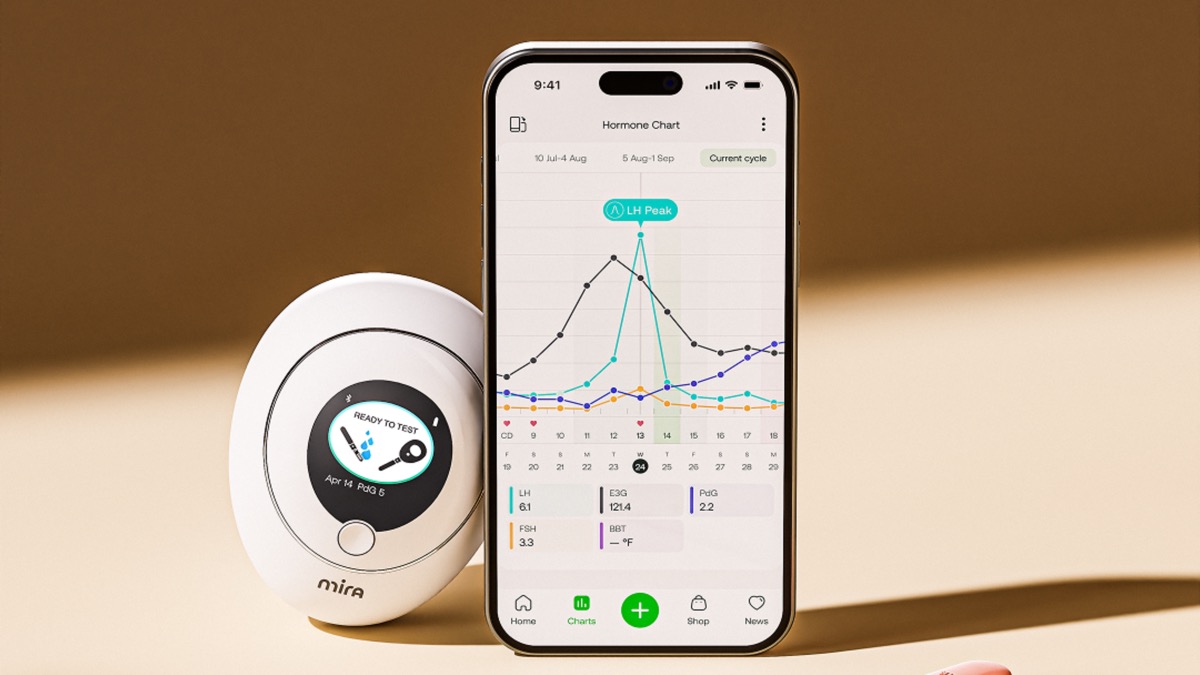
Inside my programs, we often start with Mira — an at-home device that tracks your hormones in urine across your entire cycle, day by day. Instead of one data point, you get a curve: how your estrogen actually rises and falls, whether ovulation is happening, what your progesterone does in the second half of your cycle, how this month compares to last.
For women in perimenopause, this is often the first time anyone has looked at their hormones in motion. And the pattern explains so much — why some weeks you feel like yourself and others you don’t, why sleep falls apart at certain points in your cycle, why “normal” lab results never matched your lived experience. The moving target your doctor couldn’t capture with one blood draw? We simply watch it move.
Tool two: the DUTCH test — how your body is actually handling its hormones
Real-time tracking tells us what your hormones are doing. The DUTCH test (Dried Urine Test for Comprehensive Hormones) tells us something a standard panel never will: what your body does with them.
Over a single day of simple at-home collections, DUTCH maps:
-
Your hormone metabolites — not just how much estrogen you have, but which pathways your body uses to process and clear it. Some pathways are protective; others, when overloaded, are associated with symptoms and longer-term risk. This is information a serum estradiol level cannot show you, and it changes what we do next.
-
Your full cortisol rhythm — your stress hormone measured across the day, from waking to bedtime, plus how much cortisol your body is producing overall. For the woman who is “tired but wired,” this curve is often the missing chapter of her story.
-
The gut–hormone connection — estrogen doesn’t operate alone. A community of gut bacteria called the estrobolome helps determine whether estrogen is cleared properly or recirculated back into your body. When I see certain metabolite patterns on a DUTCH report, it points us directly toward gut health — which is why hormone work and digestive work so often belong in the same investigation.
This is the difference between a snapshot and a story. One number tells you almost nothing. The pattern — production, rhythm, metabolism, clearance — tells you nearly everything.
What happens when someone finally looks
One of my clients put it this way:
“After feeling like Western medicine wasn’t getting to the root of what was going on, they helped me with hormone balancing and my overall wellness in a way that finally made sense.”
Finally made sense. That’s the phrase I hear most often — because the relief isn’t just feeling better. It’s understanding your own biology for the first time. Knowing what your body needs, why it needs it, and how to keep it working.
You asked the right question. You just needed different instruments.
If you’ve been told your hormones aren’t worth testing — or that everything looks “normal” while you feel anything but — the problem was never your question. Your body has been sending clear signals all along. It deserves someone willing to measure them properly.
That’s exactly what we do at EGFW: precision testing, pattern-based interpretation, and a plan built on your biology, your goals, and your life.
If you’re ready to see your full hormonal picture, let’s talk.
Elizabeth Greenfield, RN, MS, IFMCP is the founder of Elizabeth Greenfield Functional Wellness, a precision functional medicine practice specializing in hormonal health across the menopausal journey, gut health, and biological age reversal.
This content is for informational purposes only and does not constitute medical advice.