We’ve known for decades that blood sugar regulation matters for metabolic health. What we didn’t have — until recently — was an accessible way to see that regulation happening in real time, in real life, across an entire day and night.
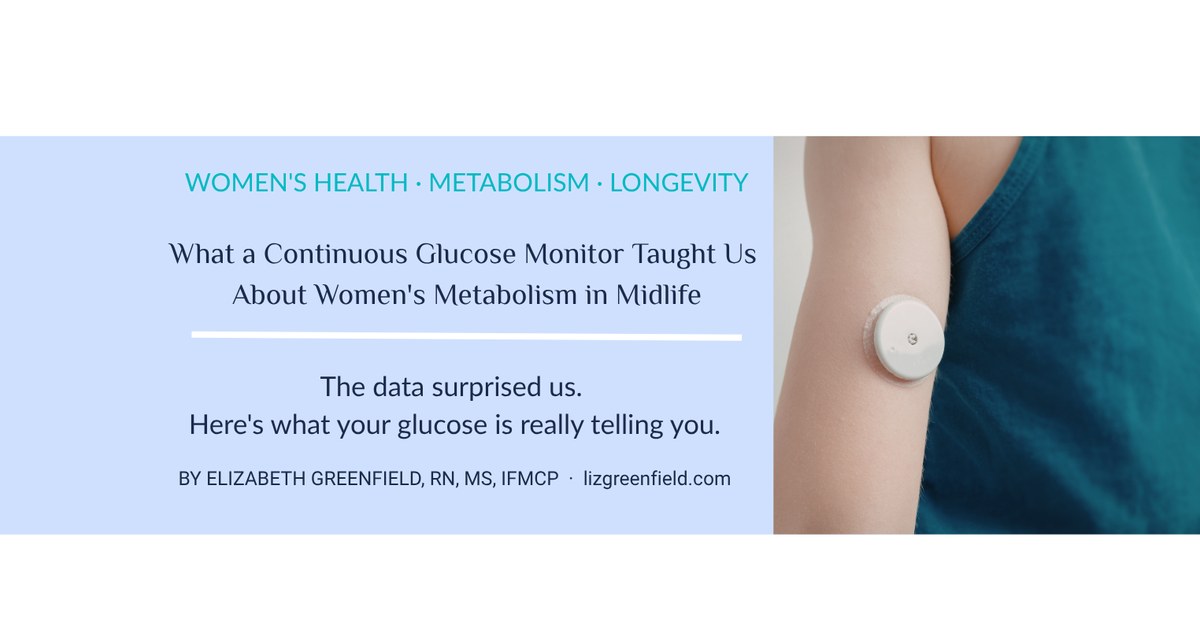
The continuous glucose monitor changed that. And for women in perimenopause and early menopause, what it reveals is both illuminating and, honestly, vindicating.
What Standard Bloodwork Misses
A standard fasting glucose or HbA1c gives you a snapshot — a single reading, or a 90-day average. What it cannot show you is variability: the peaks, the crashes, the 3am glucose dip that wakes you up, the unexpected spike from a “healthy” meal on a high-stress day.
Glucose variability — the degree to which blood sugar rises and falls throughout the day — is increasingly recognized as a more sensitive marker of metabolic health than fasting values alone. In perimenopausal women, hormonal fluctuation significantly influences this variability. A woman can have a perfectly normal fasting glucose and A1c while experiencing significant daytime and nocturnal glucose swings that are affecting her energy, sleep, and cognitive function.
Standard bloodwork will never catch this. A CGM worn for 10–14 days captures it completely.
Hormones and Glucose: A Two-Way Street
Estrogen improves insulin sensitivity. As estrogen fluctuates in perimenopause, glucose regulation shifts — often unpredictably. Women using CGMs during this transition frequently observe that identical meals produce different glucose responses depending on where they are in their cycle, how well they slept the night before, or whether they had a stressful afternoon.
This isn’t random variation. It is the physiological signature of declining and fluctuating estrogen acting on insulin receptor sensitivity in real time. Seeing it on a continuous curve transforms the abstract — “hormones affect blood sugar” — into something concrete and personal.
Combining CGM with Hormone Monitoring
In my practice, I combine CGM data with hormone monitoring using tools that enable tracking of LH, estrogen, and progesterone throughout the cycle. Observing glucose variability alongside hormone patterns and cortisol signatures eliminates guesswork from the clinical picture.
When a woman can see that her glucose spikes higher on days when estrogen is elevated, or that her worst nocturnal glucose drops coincide with the low-progesterone window before her period — or at predictable points in the week even when cycles have ended — the connection between hormones and metabolism becomes undeniable — and actionable.
This data supports informed decisions about nutrition timing, exercise type and intensity, sleep strategies, and stress management — based on actual physiological responses rather than generic recommendations.
What This Means Practically
For women in perimenopause navigating unexplained energy fluctuations, weight changes, mood variability, or sleep disruption, a CGM trial is one of the highest-yield interventions I recommend — not as a treatment, but as a diagnostic tool.
A two-week wear period shows:
- How different meals affect glucose (often counter to assumptions about “healthy” foods)
- How sleep quality affects the next day’s metabolic response
- Whether nocturnal glucose instability is contributing to 3am waking
- How stress events produce glucose spikes independent of any dietary input
- How exercise type and timing shift glucose patterns
This level of metabolic insight is not available any other way. For women who have been told their labs are normal while they continue to feel metabolically off, it often provides both explanation and a clear path forward.
Ready to look at the full picture?
Book a complimentary Wellness Deep Dive — up to an hour to explore your health concerns in real depth and understand what a personalized approach could look like for you.
The content on this blog is for informational and educational purposes only and is not intended as medical advice, diagnosis, or treatment. Always consult with a qualified healthcare provider before making changes to your diet, supplements, or health protocols.